
Are Seed Oils Bad for You? What the Research Actually Says
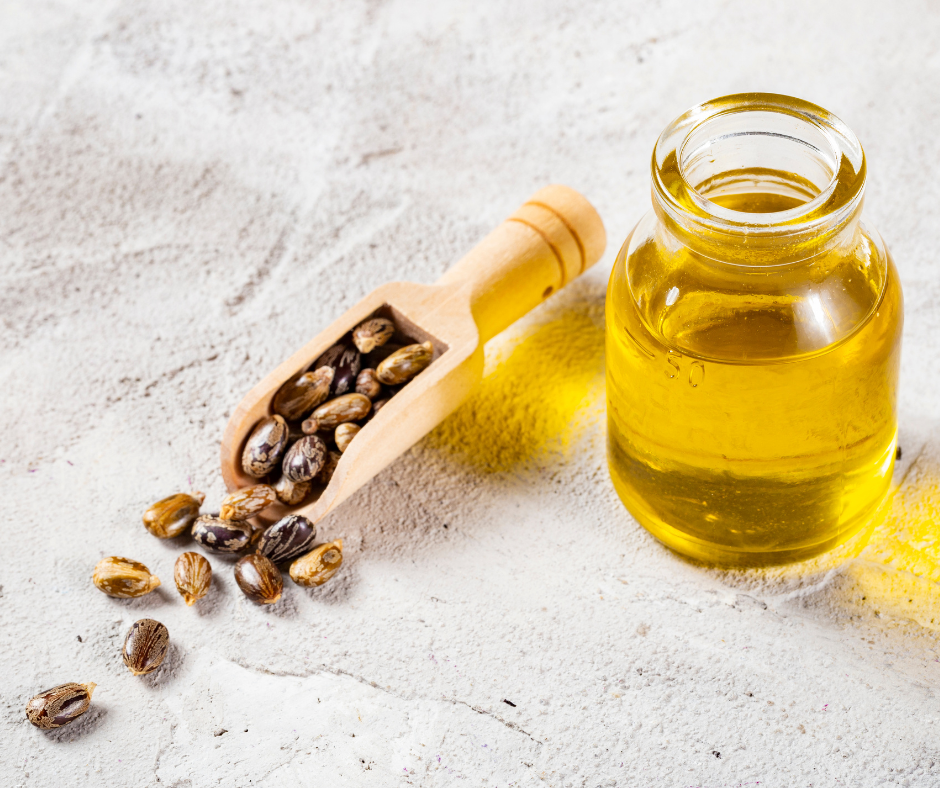
Few dietary topics generate as much heated debate online as seed oils. Scroll through any health-focused corner of the internet and you'll find people insisting that canola oil, soybean oil, and sunflower oil are slowly poisoning the population, while mainstream nutrition science tends to defend them as a reasonable alternative to saturated fat. The gap between those two positions is enormous, and bridging it requires looking honestly at what the research actually shows, rather than cherry-picking whichever study confirms a prior belief.
The short answer is that nobody fully knows yet, and the longer answer is genuinely interesting. The evidence is mixed, the studies have real flaws on both sides, and the truth probably depends heavily on what these oils are replacing in your diet and how they're being consumed in the first place. Here's a fair breakdown of where things stand.
What the Research Favoring Seed Oils Shows
The strongest case for seed oils centers on linoleic acid (LA), the primary omega-6 fatty acid found in most vegetable oils. A 2020 meta-analysis by Li et al., which pooled data from 31 prospective cohorts covering roughly 811,000 people, found that higher LA intake or circulating LA biomarkers were associated with approximately 10 to 15 percent lower all-cause, cardiovascular, and cancer mortality when comparing higher versus lower exposure groups. That's a meaningful signal across a very large sample.
The FORCE pooled analysis published by Marklund et al. in 2019 added to this picture by using individual-level data from 30 cohorts and roughly 68,700 participants, finding that higher circulating linoleic acid was associated with lower incident cardiovascular disease, lower CVD mortality, and reduced ischemic stroke risk.
Perhaps the most practically relevant study for the seed oil debate is a 2014 meta-analysis by Farvid et al., which looked specifically at dietary linoleic acid and coronary heart disease risk. The top-line numbers are notable: highest versus lowest LA intake was linked to around 15 percent fewer CHD events and 21 percent fewer CHD deaths.
More importantly, the substitution model showed that replacing 5 percent of energy from saturated fat with linoleic acid was associated with 9 percent fewer coronary events and 13 percent fewer coronary deaths. That framing matters because the debate about seed oils almost always comes down to what they're replacing, and when the answer is saturated fat, the data looks reasonably favorable. The American Heart Association's 2017 Presidential Advisory on dietary fats arrived at a similar conclusion, drawing on randomized trials and broader epidemiological evidence to support replacing saturated fat with polyunsaturated fat as a strategy for reducing cardiovascular risk.
What makes some of this evidence more credible than typical nutrition research is the use of biomarkers rather than self-reported dietary data alone. Food frequency questionnaires, the standard tool for measuring diet in epidemiology, are notoriously imprecise. People misremember what they eat, underreport certain foods, and can't account for changes in diet over months or years. Circulating fatty acid levels in blood offer a more objective measure of actual exposure, which is why the Marklund biomarker analysis carries particular weight. That said, biomarkers aren't a perfect fix either, and the deeper methodological problems with this entire body of research are substantial enough to deserve their own discussion.
Do Seed Oils Cause Heart Disease? The Case Against Them and Its Limits
The strongest human outcome data questioning seed oils comes from two recovered-data reanalyses published in the BMJ. The first, by Ramsden et al. in 2013, reanalyzed the Sydney Diet Heart Study, a 1966 to 1973 secondary-prevention trial in which 458 men with recent coronary events were randomized to replace saturated fat with high-linoleic safflower oil. The intervention group experienced higher mortality, with hazard ratios of 1.62 for all-cause mortality and 1.70 for cardiovascular mortality.
The second reanalysis, published in 2016, recovered unpublished outcome data from the Minnesota Coronary Experiment, a large double-blind trial from roughly the same era involving about 9,570 participants who replaced saturated fat with corn oil. Cholesterol dropped as expected, but there was no clear mortality benefit, and in some subgroups the trend moved in the wrong direction.
The problem is that both trials have significant limitations that make it hard to generalize from them to modern diets. They were conducted decades ago using food products like early margarines that contained trans fats and other compounds not reflective of contemporary cooking oils. They involved high-risk populations in institutional settings with unusual dietary conditions, and their intervention designs don't cleanly map onto how people actually consume vegetable oils today. Ramsden's findings are more a challenge to older trial methodology than a verdict on seed oils as they exist in current food environments.
Do Seed Oils Cause Inflammation? The Oxidized Linoleic Acid Hypothesis
The mechanistic critique of seed oils deserves more careful attention than it often receives in mainstream nutritional discourse. The most developed version of this argument centers on what has been called the Oxidized Linoleic Acid Metabolite (OXLAM) hypothesis, advanced prominently by DiNicolantonio and O'Keefe and elaborated in subsequent work by researchers including Cate Shanahan, author of Dark Calories: How Vegetable Oils Destroy Our Health and How We Can Get It Back.
The core claim is that linoleic acid—the predominant polyunsaturated fatty acid in most seed oils—is uniquely vulnerable to oxidation because of its two double bonds, and that when it oxidizes, either during food processing, storage, or metabolic processing in the body, it generates a class of bioactive compounds including 4-hydroxynonenal (4-HNE), malondialdehyde (MDA), and oxidized LDL particles.
These metabolites are not merely inert byproducts. 4-HNE in particular is a highly reactive aldehyde that forms protein adducts, impairs mitochondrial function, promotes inflammation through NF-κB activation, and has been detected at elevated levels in atherosclerotic plaques, Alzheimer's disease tissue, and various cancers. Circulating OXLAMs have been found in human plasma at biologically significant concentrations, and some animal studies have shown that diets high in oxidized linoleic acid produce more atherosclerosis and metabolic disruption than equivalent diets using fresh, unoxidized oil.
There is also the question of tissue incorporation. Linoleic acid is not simply burned for fuel; it is incorporated into cell membranes and stored in adipose tissue, and its presence in those compartments may affect how susceptible cells are to oxidative stress over time. A 2025 Frontiers in Nutrition article reports that a compilation of adipose-tissue studies from 1955–2006 shows linoleic acid rising from roughly 5–10% in 1955 to over 20% by around 2008, suggesting that modern diets have shifted body-fat composition in ways that may have downstream consequences.
Why the Seed Oil Research Is Harder to Interpret Than It Looks
The most underappreciated problem with the pro-seed-oil literature is healthy user bias. People who consume more polyunsaturated fats from vegetable oils tend, as a group, to also eat more fruits and vegetables, smoke less, exercise more, and have better access to healthcare. Statistical adjustment can reduce this confounding, but it can't eliminate it entirely. When Li et al. or Farvid et al. show favorable associations with LA intake, some portion of that signal almost certainly reflects the broader dietary and lifestyle patterns of people who eat that way, not the oil itself.
There's also a context problem that both sides of the debate tend to ignore. Seed oils don't exist in a vacuum in the food supply. Higher linoleic acid intake in a given population might mean more salad dressing and home-cooked stir fry, or it might mean more fried fast food and ultra-processed snacks. The health implications of those two scenarios are very different, and most observational studies can't cleanly separate them. When researchers pool data across cohorts from different countries, eras, and dietary cultures, they're averaging over that enormous variability, which can produce an "average effect" that doesn't accurately represent any specific population or eating pattern.
What the field genuinely needs to settle this debate is large, long-term randomized trials using modern oils, real-world foods, rigorous adherence tracking, and hard clinical endpoints like heart attack, stroke, and all-cause mortality. Those trials don't fully exist. The RCTs that do exist are mostly older, conducted in specific high-risk populations, or designed to test broad dietary patterns rather than seed oils as an isolated variable.
Are Seed Oils Safe for Cooking? High Heat Is Where It Gets Complicated
One area where the concern about oxidation has practical grounding is cooking. Linoleic acid's chemical instability becomes most relevant under heat. When seed oils high in polyunsaturated fats—sunflower, safflower, corn, soybean, and to a lesser extent canola—are used for high-heat cooking, particularly frying or sautéing at or above 180°C (350°F), the rate of oxidative degradation accelerates substantially.
Studies measuring aldehydes in cooking fumes and in oils after heating have found that high-PUFA oils generate significantly more 4-HNE and related compounds than more stable alternatives. This is where the choice of cooking fat genuinely matters. Oils derived from tree fruits—olive, avocado, and coconut—hold up considerably better under heat. Olive and avocado oils are predominantly monounsaturated, which gives them greater thermal stability and a lower tendency to generate harmful aldehydes when heated. Coconut oil, being largely saturated, is more stable still, though its fatty acid profile raises separate considerations for cardiovascular health. All three are minimally processed relative to refined seed oils, which typically undergo bleaching, deodorizing, and high-temperature extraction before reaching the shelf.
Using seed oils repeatedly in a deep fryer, or heating them to smoking point, is a meaningfully different chemical situation than the conditions under which many clinical trials tested their effects. For everyday cooking, defaulting to olive or avocado oil—and reserving coconut oil for applications where its flavor is welcome—is a reasonable, evidence-informed choice.
The Bottom Line: What Should You Actually Do?
The honest answer is that seed oils are probably not the dietary villain they're made out to be in online health communities, but the blanket reassurance offered by mainstream nutrition guidelines may be premature too. The large epidemiological studies suggest that swapping saturated fat for linoleic acid is associated with better cardiovascular outcomes, and that signal is consistent enough to take seriously. At the same time, the OXLAM hypothesis raises legitimate mechanistic questions that haven't been fully resolved by clinical trials, and the long-term effects of high linoleic acid incorporation into human tissue remain genuinely uncertain.
A reasonable, evidence-informed position looks something like this: seed oils used in cold applications or light cooking are unlikely to pose meaningful harm for most people, particularly when they're displacing saturated fat in the diet. But for high-heat cooking, olive oil, avocado oil, and coconut oil all offer greater thermal stability and less processing. And in the context of ultra-processed foods, where seed oils arrive alongside refined carbohydrates, preservatives, and industrial additives, the oils themselves may be the least of the problem.
Note: Some of the links in this article may be affiliate links, which means Grassroots Vitality may earn a small commission at no extra cost to you.
References
Li, J., Guasch-Ferré, M., Li, Y., & Hu, F. B. (2020). Dietary intake and biomarkers of linoleic acid and mortality: Systematic review and meta-analysis of prospective cohort studies. The American Journal of Clinical Nutrition, 112(1), 150–167. https://doi.org/10.1093/ajcn/nqz349.
Marklund, M., Wu, J. H. Y., Imamura, F., et al. (2019). Biomarkers of dietary omega-6 fatty acids and incident cardiovascular disease and mortality: An individual-level pooled analysis of 30 cohort studies. Circulation, 139(21), 2422–2436. https://doi.org/10.1161/CIRCULATIONAHA.118.038908.
Farvid, M. S., Ding, M., Pan, A., Sun, Q., Chiuve, S. E., Steffen, L. M., Willett, W. C., & Hu, F. B. (2014). Dietary linoleic acid and risk of coronary heart disease: A systematic review and meta-analysis of prospective cohort studies. Circulation, 130(18), 1568–1578. https://doi.org/10.1161/CIRCULATIONAHA.114.010236.
Sacks, F. M., Lichtenstein, A. H., Wu, J. H. Y., Appel, L. J., Creager, M. A., Kris-Etherton, P. M., et al. (2017). Dietary fats and cardiovascular disease: A presidential advisory from the American Heart Association. Circulation,136(3), e1–e23. https://doi.org/10.1161/CIR.0000000000000510.
Ramsden, C. E., Zamora, D., Leelarthaepin, B., Majchrzak-Hong, S. F., Faurot, K. R., Suchindran, C. M., et al. (2013). Use of dietary linoleic acid for secondary prevention of coronary heart disease and death: Evaluation of recovered data from the Sydney Diet Heart Study and updated meta-analysis. , 346, e8707. https://doi.org/10.1136/bmj.e8707.
Ramsden, C. E., Zamora, D., Majchrzak-Hong, S., Faurot, K. R., Broste, S. K., Frantz, R. P., et al. (2016). Re-evaluation of the traditional diet-heart hypothesis: Analysis of recovered data from Minnesota Coronary Experiment (1968–73). BMJ, 353, i1246. https://doi.org/10.1136/bmj.i1246.
DiNicolantonio, J. J., & O’Keefe, J. H. (2018). Omega-6 vegetable oils as a driver of coronary heart disease: The oxidized linoleic acid hypothesis. Open Heart, 5(2), e000898. https://doi.org/10.1136/openhrt-2018-000898.
Mazidi, M., Shekoohi, N., Katsiki, N., Banach, M., & the Lipid and Blood Pressure Meta-analysis Collaboration (LBPMC) Group. (2022). Omega-6 fatty acids and the risk of cardiovascular disease: Insights from a systematic review and meta-analysis of randomized controlled trials and a Mendelian randomization study. Archives of Medical Science, 18(2), 466–479. https://doi.org/10.5114/aoms/136070.
Hooper, L., Martin, N., Jimoh, O. F., Kirk, C., Foster, E., & Abdelhamid, A. S. (2020). Reduction in saturated fat intake for cardiovascular disease. Cochrane Database of Systematic Reviews, (8), CD011737. https://doi.org/10.1002/14651858.CD011737.pub3.
Shanahan, C. (2025). The energy model of insulin resistance: A unifying theory linking seed oils to metabolic disease and cancer. Frontiers in Nutrition, 12, 1532961. https://doi.org/10.3389/fnut.2025.1532961.
Shanahan, C. (2024). Dark Calories: How Vegetable Oils Destroy Our Health and How We Can Get It Back. Balance.
Han, I. H., & Csallany, A. S. (2008). Temperature dependence of HNE formation in vegetable oils and butter oil. Journal of the American Oil Chemists’ Society, 85(8), 777–782. https://doi.org/10.1007/s11746-008-1250-x.
Seppänen, C. M., & Csallany, A. S. (2002). Formation of 4-hydroxynonenal, a toxic aldehyde, in soybean oil at frying temperature. Journal of the American Oil Chemists’ Society, 79(10), 1033–1038. https://doi.org/10.1007/s11746-002-0598-z.
Takhar, M., Li, Y., Ditto, J. C., & Chan, A. W. H. (2023). Formation pathways of aldehydes from heated cooking oils. Environmental Science: Processes & Impacts, 25(2), 165–175. https://doi.org/10.1039/D1EM00532D.
